Indoor Air Quality Services
Indoor air quality services are the measures that change what reaches the air people breathe indoors: controlling contamination sources, correcting moisture, keeping filtration and ventilation working as designed, and cleaning the heating and cooling system where a specific condition justifies it. Duct cleaning is one item on that list, not the whole list, and the one most often oversold. This page states what they can and cannot do, what the U.S. Environmental Protection Agency actually says, and how we scope the work nationwide.
What duct cleaning covers
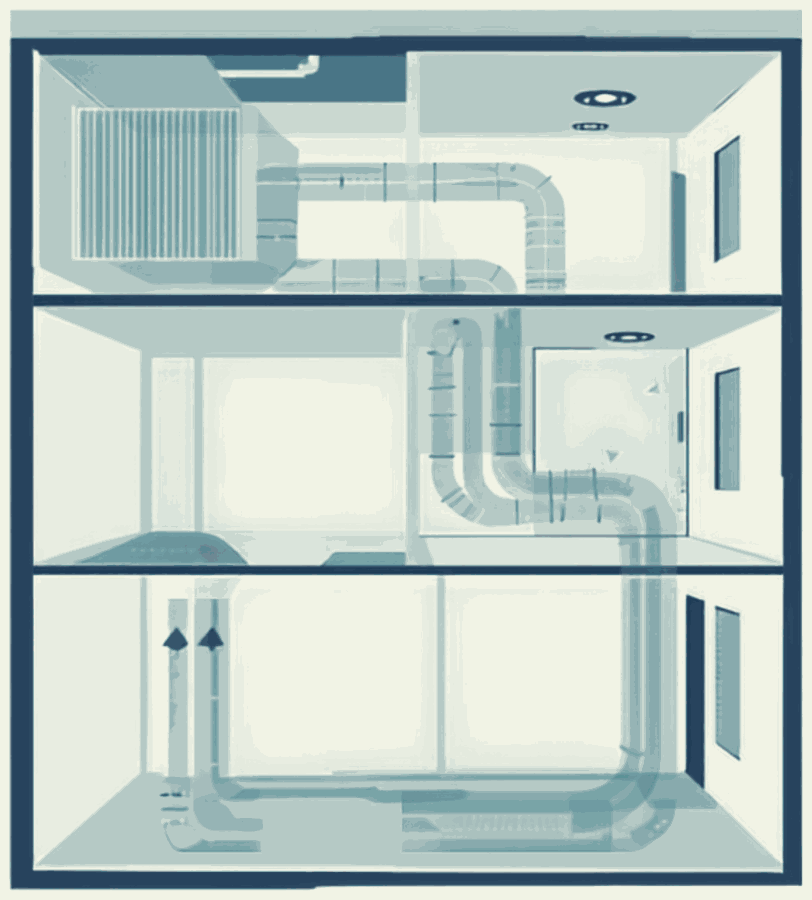
EPA defines the scope broadly: supply and return ducts and registers, cooling coils, condensate drain pans, and the air handling unit and its fan. EPA warns that failing to clean a component of a contaminated system can re-contaminate the entire system, negating any benefit. A bid covering registers and trunk lines but leaving the coil, drain pan and air handler untouched is not a system cleaning. We scope HVAC duct cleaning and commercial air duct cleaning against that component list, not a linear-foot count.
What EPA says about duct cleaning and health
State it accurately or not at all. EPA writes that “duct cleaning has never been shown to actually prevent health problems,” and states it “neither establishes duct cleaning standards nor certifies, endorses, or approves duct cleaning companies.” That guidance addresses homes, not commercial facilities. For the efficacy question in full, see does air duct cleaning really work and is air duct cleaning worth it; this page is about scoping the service.
The three conditions EPA says warrant cleaning
- Substantial visible mold growth inside hard surface (for example, sheet metal) ducts or on other heating and cooling components.
- Ducts infested with vermin, such as rodents or insects.
- Ducts clogged with excessive dust and debris, and/or particles actually released into the space from supply registers.
Where none is found, EPA says cleaning is probably unnecessary, and that dusty return registers are normal and can simply be vacuumed. For the mechanics rather than the decision, see what air duct cleaning involves.
Correct the cause, not the symptom
Cleaning a contaminated system without removing what contaminated it buys a cycle, not a fix. EPA states these conditions usually suggest underlying causes, and that the cause must be corrected before any cleaning or replacement or the problem will likely recur. Controlling moisture is the most effective prevention of biological growth in all duct types. EPA notes condensation on or near cooling coils is a major factor in system moisture contamination.
Dust, mold-like material and confirmed mold
EPA states there is no evidence that a light amount of household dust in air ducts poses any risk to your health, and that dirty ducts are only one of many particle sources. Mold-like material is an observation, not a diagnosis: only an expert can positively identify biological growth, and lab analysis may be required. EPA calls the petri-dish demonstration some providers use inappropriate. Where growth is confirmed on porous material, EPA recommends replacing wet or moldy fiberglass duct material.
Filtration, ventilation and add-on treatments
Use the highest-efficiency filter the equipment manufacturer recommends, change it regularly and more often when it clogs, and confirm air cannot bypass through gaps around the holder. Ventilation should introduce and exhaust outdoor air as designed. We sell no blanket sanitizing, fogging, UV or ozone package: EPA says research has not demonstrated the effectiveness of chemical biocides and sealants in duct cleaning or their potential adverse health effects, and describes ozone as a lung irritant regulated in outside air.
How we scope the work
We inspect before quoting and show you the condition justifying the work, including confirming no asbestos-containing materials are present, since those must not be disturbed except by specially trained and equipped contractors. EPA states steam cleaning and other moisture-involving methods should not be used on any duct work. Collection equipment should exhaust outside or be HEPA-filtered indoors, because EPA warns an inadequate vacuum collection system can release more contaminants than leaving ducts alone. Verification is visual: no debris detectable by the naked eye. Our duct cleaning service overview follows the same sequence. We provide no mold clearance or air quality testing certification.
Frequently asked questions
Do indoor air quality services improve health?
We make no health claim, and neither does our evidence. EPA states duct cleaning has never been shown to actually prevent health problems, and that studies do not conclusively demonstrate particle levels in homes increase because of dirty air ducts or go down after cleaning. EPA tells buyers not to hire duct cleaners who make sweeping health claims, calling such claims unsubstantiated.
How do I know whether the ducts actually need cleaning?
EPA names three: substantial visible mold growth inside hard surface ducts or on other heating and cooling components; ducts infested with vermin such as rodents or insects; and ducts clogged with excessive dust and debris, or particles actually released into the space from supply registers. Absent one of those findings, EPA says cleaning is probably unnecessary.
Should air ducts be cleaned on a fixed schedule?
Not according to EPA, which does not recommend routine duct cleaning, only as needed, citing continuing uncertainty about the benefits under most circumstances. EPA also tells buyers not to hire duct cleaners who recommend duct cleaning as a routine part of heating and cooling maintenance. So we sell no calendar interval; we inspect first.
Will you sanitize, fog or ozone-treat the ductwork?
Not as a default, and not on porous duct material at all. EPA states research has not demonstrated the effectiveness of chemical biocides and sealants in duct cleaning or their potential adverse health effects, describes ozone as a highly reactive gas regulated in outside air as a lung irritant, and notes some people may react negatively to biocide or ozone.
Do you provide mold testing or mold clearance?
No. We provide no mold clearance, air quality testing certification, or laboratory analysis. EPA is explicit that only an expert can positively identify a substance as biological growth and that lab analysis may be required for final confirmation. Where growth is confirmed, the moisture source must be corrected or growth will recur.
Get an inspection-first scope
Tell us what you are seeing: growth on a coil or plenum, or debris from supply registers. We will tell you whether a condition warranting duct work is present, and say so plainly when it is not. Call (832) 777-5400.